

From Warsaw to Tirana: Overcoming the past together
Reconciliation and good neighbourly relations are among the key priorities of the Stabilisation and Association Process of the Western Balkans and represent a necessary condition for the advancement of the countries of the region towards the EU. It has become clear that without launching a process supporting the dealing with the legacies of the past, filled with conflicts, violence, separation and mutual prejudices, the region will not be able to move forward from the limbo it is still stuck in, twenty years after the last violent conflict.
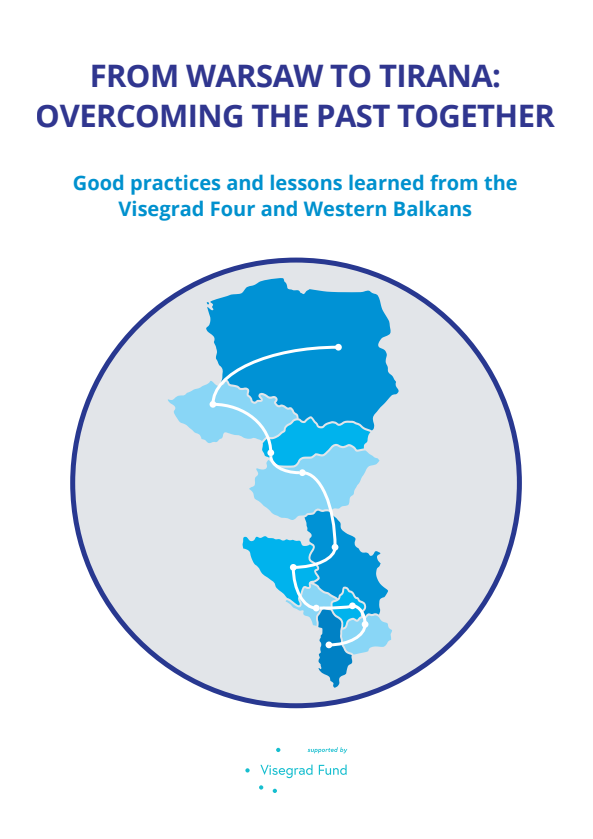
For the purpose of identifying good practices but also less positive examples and lessons learned, applicable to the Western Balkan countries, five case studies analysing different bilateral relations were written: Poland-Germany, Czechia-Slovakia, Slovakia-Hungary, Hungary-Serbia, Serbia-Albania. The aim of these case studies was to provide the background for the given cases, identify good practices and also failures in reconciliation and normalization between countries and societies in their respective processes of dealing with the past, and draw lessons and recommendations for the Western Balkan countries on the basis of these analyses.
Apart from the practical recommendations and inspiration with concrete initiatives, the research conducted in the project reveals the common patterns and sheds light on the building blocks of a successful process of reconciliation and normalization of mutual relations. The case studies show that complicated inter-ethnic relations and minority issues are not a problem limited only to the Western Balkan region, but that other countries have been dealing with similar issues too. The successful experience of the Visegrad countries with regional cooperation as well as European integration further helps to clarify how and with what limitations these two processes, both among main objectives of the Western Balkan countries, can support reconciliation between countries and communities.